
Gartner® AI Use Case Assessment for Design & Engineering in Manufacturing
20 use cases ranked by business value and feasibility, so you know exactly where AI is worth the investment.
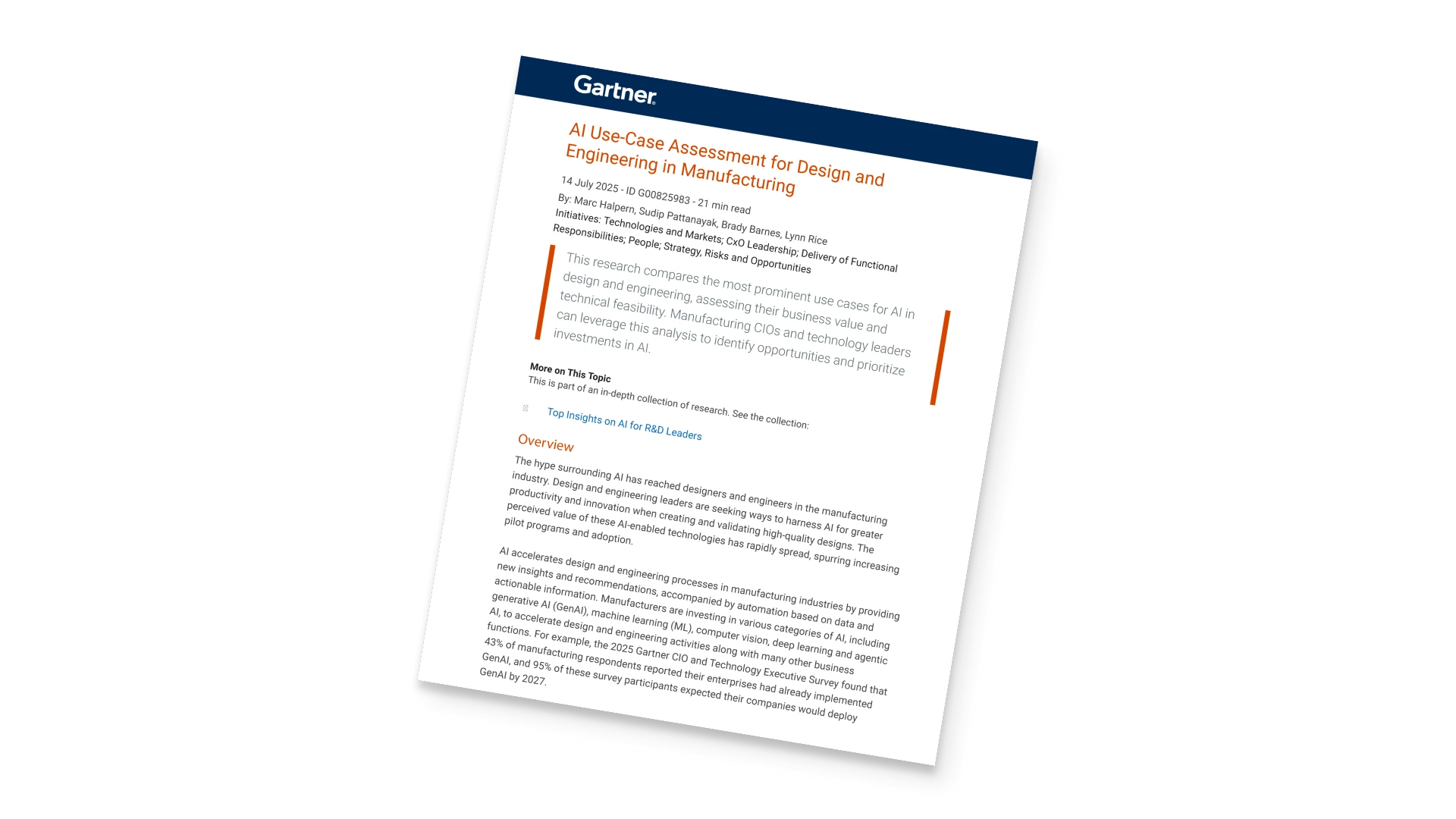
AI is everywhere in manufacturing right now, from generative design to regulatory compliance checking, but analyst-backed clarity is rare. With 43% of manufacturing CIOs already deploying GenAI and pressure to show results, the risk is two-fold: moving too slow and investing in the wrong use cases.
This isn't just a report to read. It's a system to act on.
This Gartner® report evaluates 20 AI applications for design and engineering. The result is a structured framework that separates "Likely Wins" you can act on today from "Calculated Risks" that need more groundwork, and "Marginal Gains" that may not justify the effort.
A companion scoring tool lets you adjust weightings, add or remove use cases, and tailor the assessment to your organization's specific priorities. And when it's time to build internal alignment, a ready-to-use presentation deck gives you everything you need to run workshops, brief leadership, and build consensus around your AI roadmap.
Why download this asset:
- Replace AI hype with a Gartner value-vs-feasibility matrix of 20 use cases specifically for engineering CTOs
- Customize the companion scoring tool to reflect your organization's unique context
- Drive faster stakeholder alignment with a ready-to-use workshop presentation deck
Download the report
Synera’s approach to agentic AI in engineering
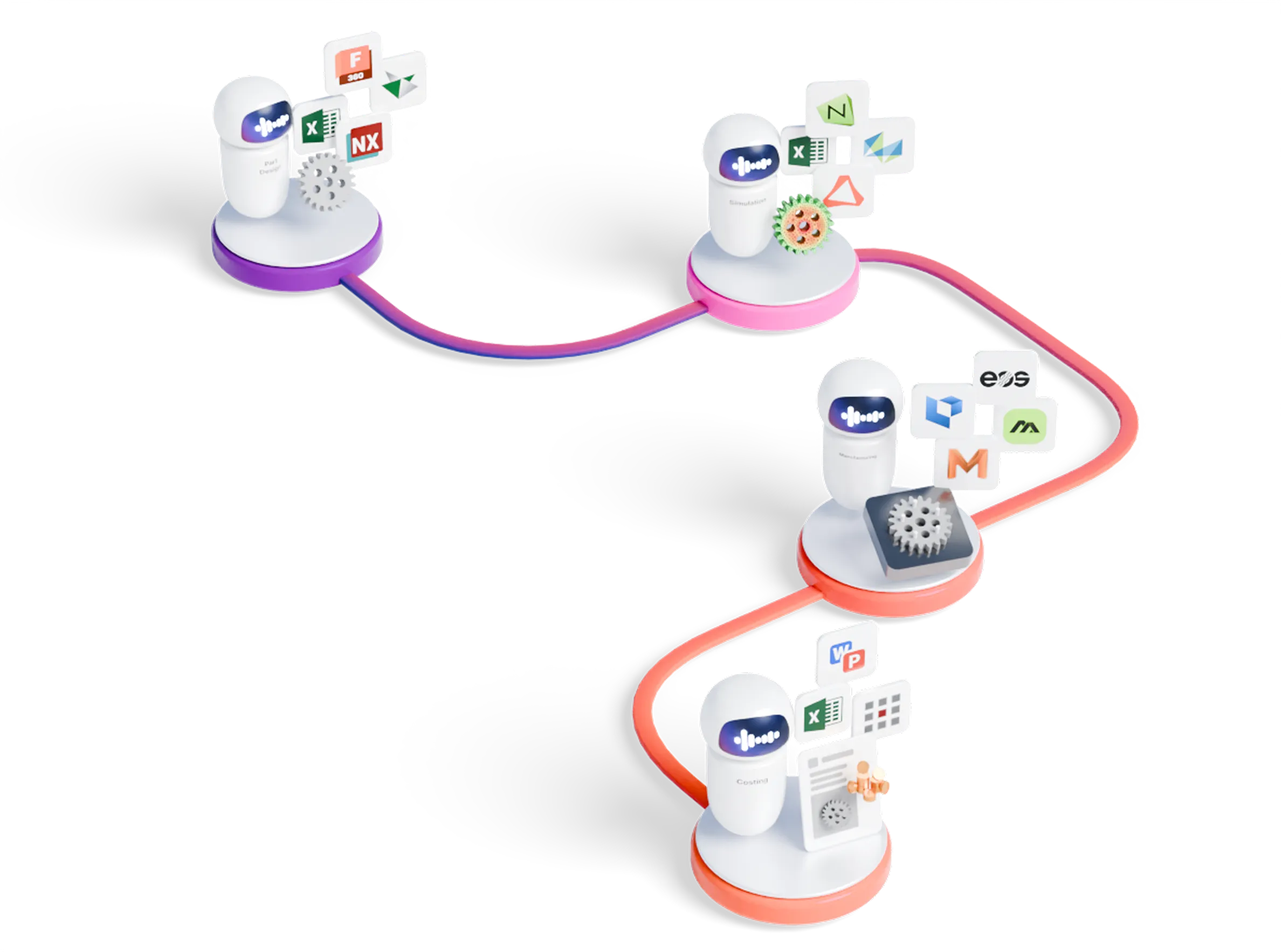
Synera AI agents are specialized digital engineers that handle the heavy lifting of repetitive engineering tasks and tool orchestration to accelerate both your digital transformation and time-to-market for a sustainable competitive advantage.
No more endless pilots and skyrocketing costs. Just an AI workforce that does what it’s intended to do, connected across your entire product development value chain.
Frequently Asked Questions: AI Use Cases in Design and Engineering
The clearest opportunities right now fall into the "Likely Wins" category, where both business value and technical feasibility are medium to high. These include requirements management, parts search for design, predictive costing, drawing verification, and PMI generation. These use cases have proven technology behind them, reasonable internal adoption readiness, and don't require overcoming significant organizational hurdles. If you're looking for where to start, these are the safest bets.
Predictive costing is one of the highest-feasibility use cases. It allows designers and engineers to see the manufacturing cost implications of their decisions upfront, before specialists commit resources to materials and production. This shortens design-for-manufacturability iteration cycles and reduces late-stage rework. Content extraction from drawings and drawing verification also reduce manual effort, cutting overhead without adding friction to existing workflows.
AI is an engineering co-worker, not a replacement. Use cases like design concept generation help engineers think beyond familiar product patterns, rather than make engineers redundant. Similarly, simulation governance and manufacturing process planning use AI to surface better insights and flag issues earlier, so engineers can focus on higher-value decisions. In most use cases, humans remain in the loop, particularly during early adoption phases.
This is exactly what use case assessments help you determine. Each use case in the Gartner assessment is scored across three feasibility dimensions: technical readiness, internal organizational readiness, and external environmental factors. Use cases like parts search and requirements management score high across all three, making them accessible even for organizations earlier in their AI journey.
Use cases like multi-objective design optimization or physical prototype testing need deeper technical expertise and have smaller user communities, making them harder to scale. The companion scoring tool included with the report lets you adjust these weightings to reflect your organization's specific starting point.