What Are AI Agents in Engineering? From Single Agents to Scalable Agentic Systems
AI agents in engineering are rapidly moving from experimental pilots to practical systems that execute real engineering work. Unlike copilot AI tools that generate text or graphics with mainly office or project management tools, AI agents in engineering are designed to operate directly within engineering tool workflows.
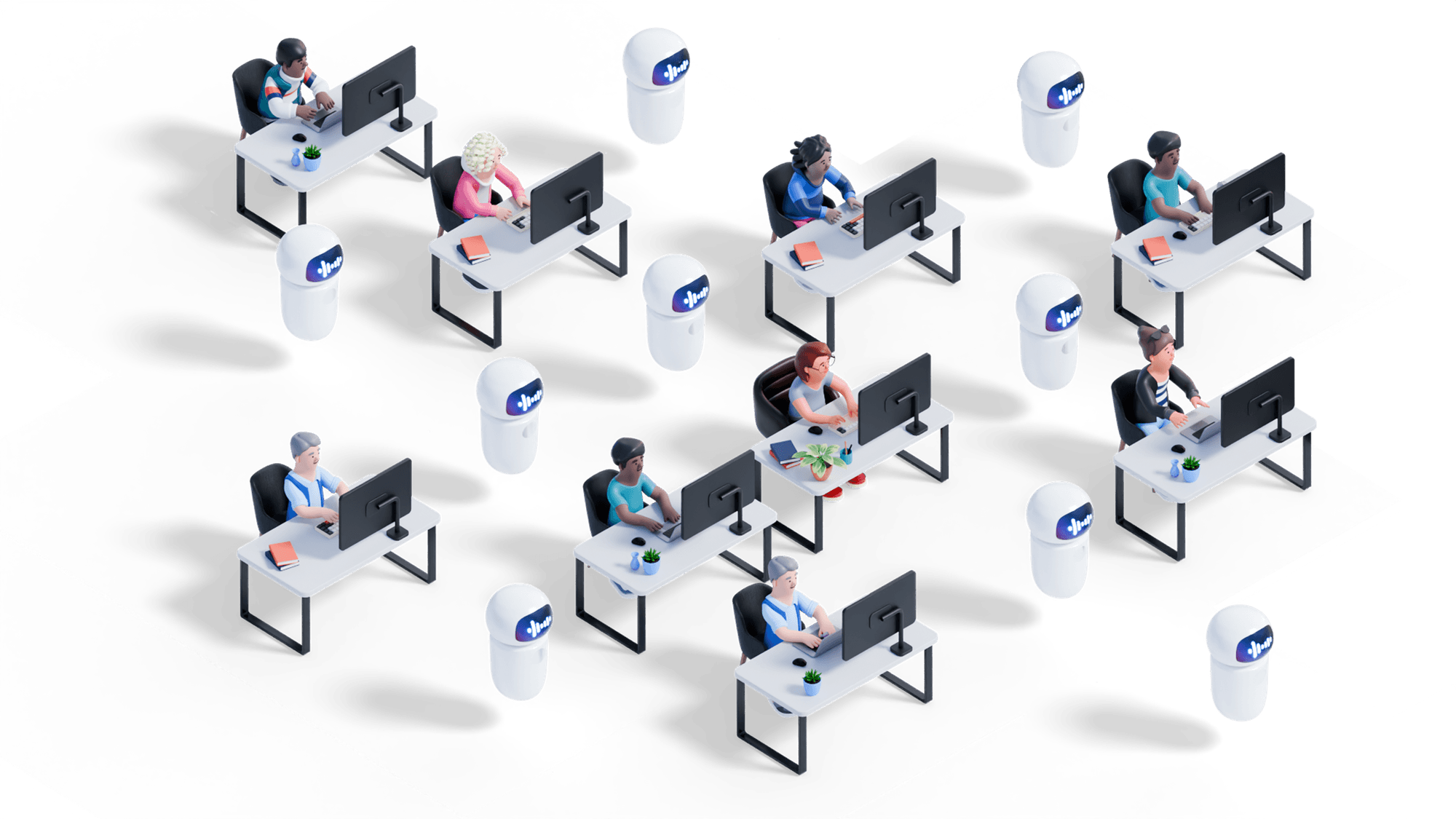
They can connect language models with domain-specific context, structured data, and specialized tools such as CAD, simulation, and costing software. The result is a new class of digital coworkers that can perform multi-step engineering tasks with human oversight.
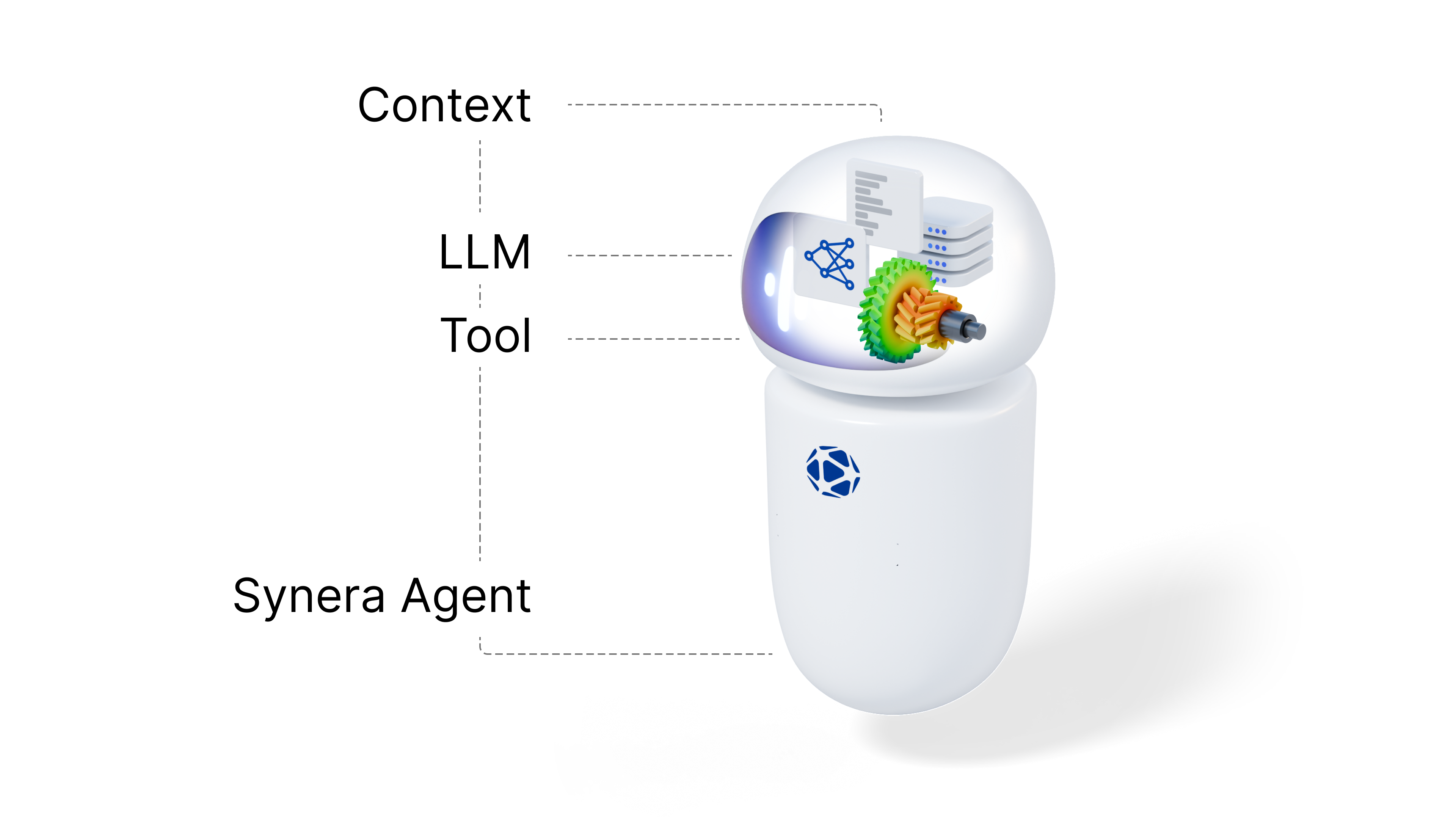
Large Language Model + Context + Tools = Agent
- Large Language Model: The "brain" for logic, reasoning, and understanding instructions.
- Context: the specific goal, role or job the a is meant to performadhering to engineering requirements, regulations, and constraints.
- Tools: External systems, such as PDF reader, Excel, or even specialized engineering tools and workflows.

By equipping an LLM with context and tools, its function transforms. Instead of merely providing theoretical text-based answers, an agent can interact with engineering systems, manipulate them directly, and deliver solutions that an engineer can rely upon. It moves from being a conversationalist to being a collaborator.
However, this single-agent architecture soon encounters its own limitations. The sheer volume of information and contextual complexity inherent in engineering is something that a single agent is not fully capable to handle. This created the need for a more sophisticated, collaborative framework to manage the vast web of engineering data and processes.
This realization leads directly from the concept of a single agent to the necessity of a multi-agent system (MAS), designed specifically to orchestrate AI capabilities at an enterprise scale.
Multi-Agent AI Systems for Engineering Workflows
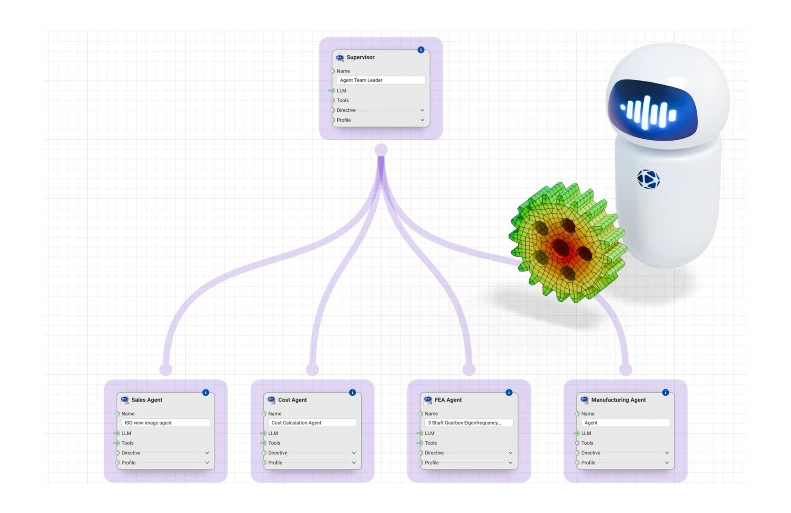
Agentic AI systems that specialize in engineering, like those implemented with Synera, represent the state-of-the-art solution for orchestrating teams of AI agents in complex domains. These teams consist of specialized agents, like a CAD agent, an FEM agent, and a cost agent, that work together across multiple steps in a product creation process.
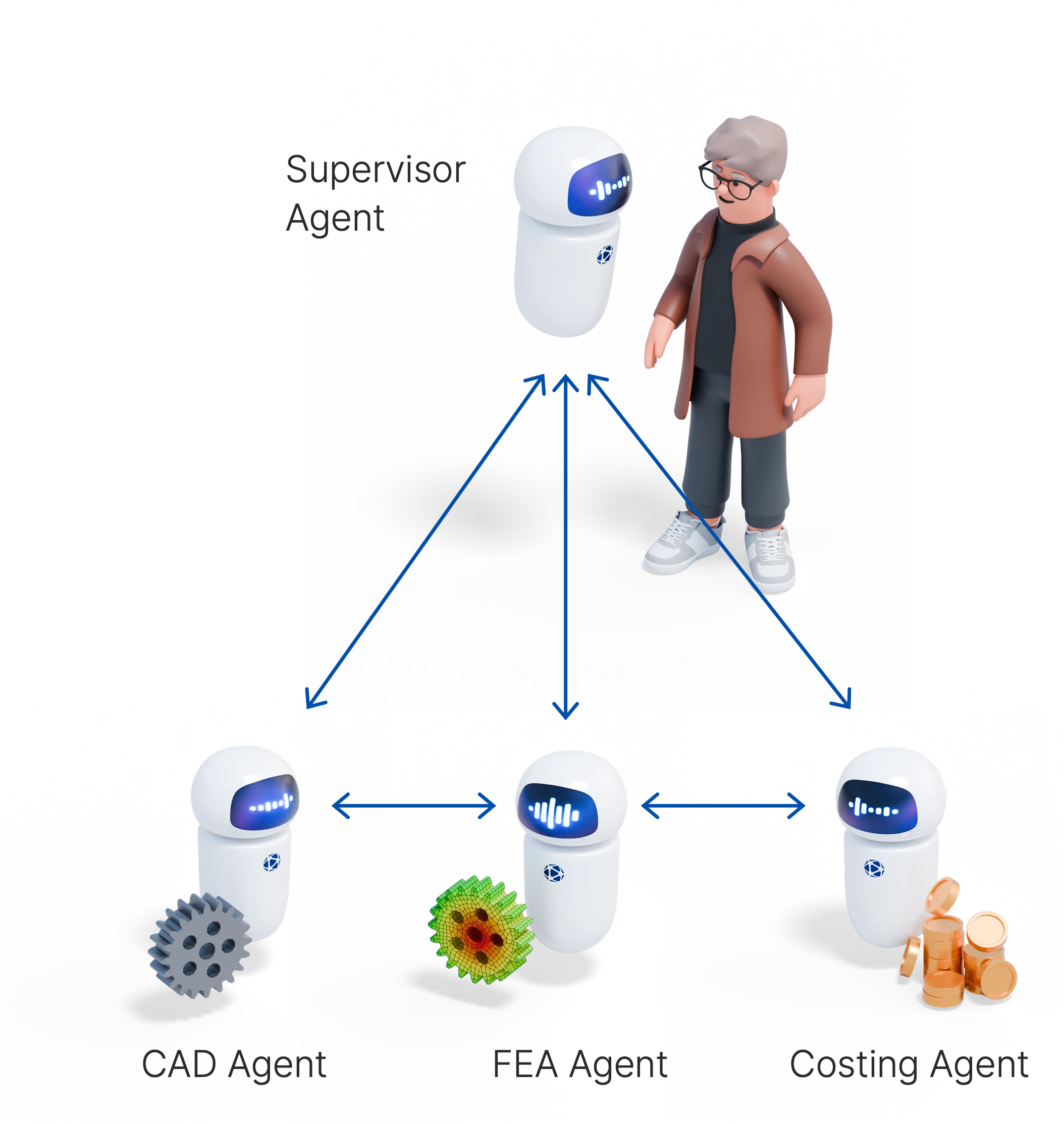
This multi-agent approach was born from the practical need to manage the vast combinations of context and tools that can overwhelm a single AI agent. Instead of a user interacting with one agent connected to a set of tools, Synera users engage with a supervisor agent, that in turn orchestrates a team of specialized agents, digital engineers, where specialists (like a"CAD designer" or an “FEA expert") work together to deliver much higher quality on detailed tasks.
Each digital engineer possesses domain-specific engineering knowledge, access to specific tools, like Moldflow, Fusion, HyperMesh or Siemens NX and clear process workflows to ensure quality results engineers can trust.
This architecture developed by Synera allows the team of agents to deliver tested product designs, while the workflows act as guardrails to prevent hallucinations, ultimately ensuring results engineers can trust. This framework helps AI advance from simply being able to "talk and reason" to being able to "act and analyze" delivering fast product development results in an efficient collaboration and work split with human engineers. Human engineers are the creative and innovative minds and get answers to their ideas very fast from agentic coworkers.
As an example, see how AI agents work for NASA in this short video:
How AI Agents Are Used by Engineering Teams
Engineering teams use AI agents as digital coworkers that combine the reasoning capabilities of large language models with an orchestration layer and direct access to rule-based workflows and engineering tools. The agents do not replace engineers. Instead, they learn from engineering decisions, enforce consistency, and carry context across engineering tools and teams, relying on humans when goals, quality criteria or judgment are required.
CAD automation
How AI agents work: AI agents generate and modify CAD models by directly interacting with industry-standard CAD tools, while engineers define requirements and approve results.
- Engineers describe requirements in natural language, such as functional constraints or design intent.
- Specialized CAD agents translate these inputs into structured actions and execute them directly in tools such as CATIA, Creo, or NX.
- For parametric designs, agents adjust parameters and regenerate geometry through workflows, like those built in Synera, ensuring consistency without manual rework.
- Throughout the process, agents apply institutional rules such as tolerances and standards, and request human review when conflicts or ambiguities arise.
Human oversight:
Engineers validate geometry, approve changes, and intervene when design tradeoffs require expert judgment.
Design-to-cost optimization
How AI agents work:
A team of agents evaluate cost implications of design decisions early, using costing tools rather than estimates.
- Costing agents analyze CAD and BOM data and connect directly to expert software such as Facton or custom databases to calculate physically reasonable costs.
- Engineers ask “what-if” questions, such as how cost changes with production volume or material choice.
- Agents automatically run scenarios, compare alternatives, and surface tradeoffs for review.
- When lower-cost options are feasible, agents coordinate with CAD and process agents to propose design alternatives.
Human oversight:
Engineers and cost specialists review assumptions, approve scenarios, and decide which tradeoffs align with business and performance goals.
Simulation and validation
How AI agents work:
Simulation agents automate setup and execution while preserving engineering intent and physical correctness.
- Agents interpret design contexts to define load cases, boundary conditions, materials, and solver settings in FEA and CFD tools.
- For computationally intensive simulations, agents use reduced-order models to provide fast, directional insight before full validation runs.
- Multi-agent workflows execute large-scale validation, such as overnight simulations across many design variants.
- Results are summarized and flagged for anomalies, with traceability back to assumptions and inputs.
Human oversight:
Simulation experts review results, validate assumptions, and decide when full-fidelity analysis is required.
RFQ Evaluation and Selecting Suppliers
How AI agents work:
Agents coordinate data and analysis across departments to accelerate the RFQ process without losing engineering precision.
- A supervisor agent orchestrates inputs from a team of agents: sales, engineering, assembly, and purchasing.
- Agents extract key requirements from large customer documents, identify inconsistencies, and translate them into structured engineering data.
- Sourcing agents evaluate supplier strategies using cost, risk, and feasibility criteria.
- The team of agents assemble RFQ packages and initial estimates automatically, surfacing open questions for human input.
Human oversight:
Engineers and sourcing teams review requirements, validate assumptions, and make final supplier and pricing decisions.
Agentic AI opportunities and challenges in engineering
Engineering is a unique challenge that can’t be easily solved by any AI agent solution. Engineering relies on structural knowledge and accurate physics, such as CAD data and simulation results, for which LLMs and generalized agents are not primarily designed.
Robust and seamless tool integration across the product development process is another key to overcoming a fundamental hurdle to agentic AI in engineering. Equally important is protecting the IP of manufacturers. Cyber security is a key reason why Synera AI agents are deployed via on-premises infrastructure and not via the cloud.
According to my understanding of the Gartner® report Manufacturing Predicts 2026: AI Agents, Digital Twins and the Race to Autonomous Operations, while AI agents are advancing toward autonomous operations, adoption in the manufacturing sector lags due to these specific barriers:
- Technology integration challenges
- The high stakes of safety-critical environments
- Limited AI readiness within organizations
- Persistent issues with data quality and availability
- Heightened cybersecurity concerns
Agentic AI solutions for engineering must successfully navigate these challenges – technology and organizational change need to go hand-in-hand. Those that do, will define the pace at which engineering-heavy enterprises move from agentic AI pilots to an established AI engineering operating model.
Navigating the 40% Cost Escalation
Additionally, there will be an increasingly prohibitive cost factor catalyzed by this autonomous shift. Gartner predicts: “By 2029, the annual cost for manufacturing core systems such as product development, manufacturing execution and PLM software and related services will rise by 40%."
Gartner notes that, "Deeper lock-in with incumbent enterprise-wide platform providers encourages users to seek lower-cost technology providers offering high cloud-native AI value. These new-generation technology companies will gain traction, challenging incumbents and reshaping competitive market dynamics.”
Success requires solutions that move beyond fragmented pilots, overcome organizational barriers to adoption, and build a robust automation foundation where agents and humans share a flexible automation platform that enables switching between different CAD, CAE, meshing or solver, and PLM applications very easily to choose the most suitable ones and enable smooth tool transitions should cost-saving become a factor.
Quantifying AI adoption and the competitive imperative for business executives
To make informed investment decisions and set realistic technology roadmaps, it is critical to quantify the rate of AI's progress.
The number of human-guided multi-agent systems in engineering is increasing rapidly today. These have already improved efficiency and lead time. As the next phase of agentic AI emerges, the application of semi-autonomous agents in key use cases has impressive potential to further solve engineering pressure to do more with less.
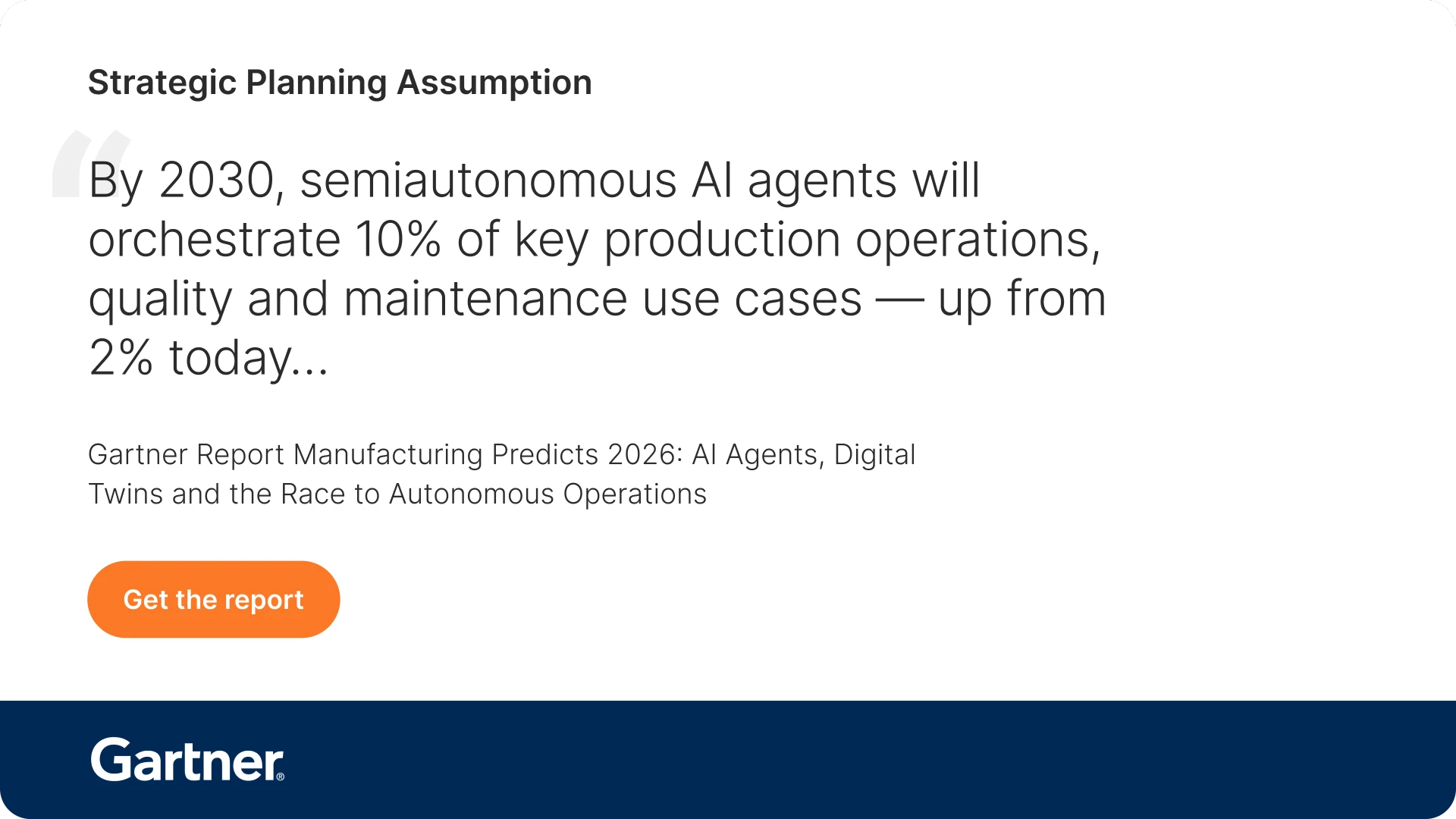
A strategic planning assumption from Gartner predicts that “by 2030, semi-autonomous AI agents will orchestrate 10% of key production operations, quality, and maintenance use cases.” This represents a significant increase from just 2% today, though it is emphasized that humans will retain final approval for all critical decisions. You can download the Gartner report here.
The fact that the tool layers for engineering are pretty much fixed means that the true competitive differentiator is no longer access to the latest AI model, but the organizational readiness and specialized agentic engineering solutions that can connect to the engineering tool layer to deploy agents effectively and equip them with powerful tools.
The competitive imperative for every leader is therefore clear: shift focus from evaluating the next AI model to architecting the operational context: the integrated data, tools, and workflows that agentic AI systems require. The organizations that build this foundation today will be the ones that are first to capture the value of AI tomorrow.
Explore how leading engineering organizations are deploying AI Agents today in an on-demand webinar: How to Deploy AI Agents in Engineering Teams to Build a Scalable Competitive Advantage.
Actionable insights to help CIOs and engineering leaders
Read the Gartner report, “Manufacturing Predicts 2026: Digital Twins, AI Agents, and the Race to Autonomous Operations” for actionable guidance on the path to agentic AI.

AI Agents for Engineering FAQ
How is AI used in engineering?
AI is used as a digital coworker that handles repetitive, low-value tasks, so engineers can focus on higher-value work. It accelerates iteration cycles by automating complex processes such as requirement analysis and RFQ preparation or RFQ evaluation and supplier selection.
AI-enhanced workflows also use reduced-order models to predict stress or CFD results in seconds, providing fast insights that previously required hours of computation. In addition, AI helps capture and preserve institutional knowledge by turning expert decisions into searchable, reusable digital assets.
What is a multi-agent system in engineering?
A multi-agent system (MAS) is a group of specialized AI agents working together to complete complex engineering tasks that are too large for a single agent. This mirrors how real engineering teams operate.
Each agent is assigned a specific role, such as CAD, simulation, or costing. A supervisor agent acts as a project manager, coordinating information flow and activating the right specialists at the right time. This machine-to-machine collaboration reduces delays caused by manual handoffs between people.
How do AI agents integrate with CAD and simulation tools?
AI agents integrate with engineering software by calling rule-based workflows (such as Synera workflows) through REST APIs. These workflows serve as standardized connectors to tools like Siemens NX, CATIA, Creo, and FEA solvers.
To make tools usable by agents, engineering processes are parameterized into clear inputs and outputs. This allows agents to reliably modify models, run simulations, and pass results between tools without manual intervention.
Are AI agents reliable for engineering decisions?
Reliability is achieved by separating AI reasoning from engineering calculations. The agent uses large language models to reason and plan, but all calculations are executed by deterministic, physically accurate engineering software.
To build trust, systems provide full transparency through execution traces. Engineers can review the agent’s reasoning steps, the tools it used, and the intermediate results, ensuring outputs are grounded in engineering reality rather than AI guesswork.
Can AI agents replace engineers?
The goal of agentic AI is to support and amplify engineers, not replace them. While agents can handle 50% to 70% of repetitive engineering tasks, humans remain essential for judgment, creativity, and safety-critical decisions.
Over time, engineering organizations are expected to evolve into a “diamond-shaped” structure, where engineers take on higher-value roles as supervisors, reviewers, and decision-makers for a growing digital workforce.
About the author:

Dr. Marc-Florian Uth has worked with and for organizations in various industries, from automotive to industrial goods and medical technology, supporting complex engineering and R&D environments at the intersection of R&D transformation, AI, and scalable product development. With a background in computational engineering and years of experience with enterprise R&D teams, he helps engineering leaders rethink how complex systems development processes are optimized, automated, and scaled. His work at Synera focuses on applying agentic AI and workflow automation to reduce engineering bottlenecks and accelerate time to market across global teams. Marc regularly collaborates with SVPs of Engineering and Chief Technology Officers to translate AI capabilities into practical, production-ready approaches that fit real-world constraints. He brings a grounded, systems-level perspective on how engineering organizations can evolve processes, organizational models, tooling, and decision-making as complexity and global competition increase.
Gartner, Manufacturing Predicts 2026: Digital Twins, AI Agents, and the Race to Autonomous Operations, 10 December 2025, Alexander Hoeppe Et Al. Gartner is a trademark of Gartner, Inc. and/or its affiliates.