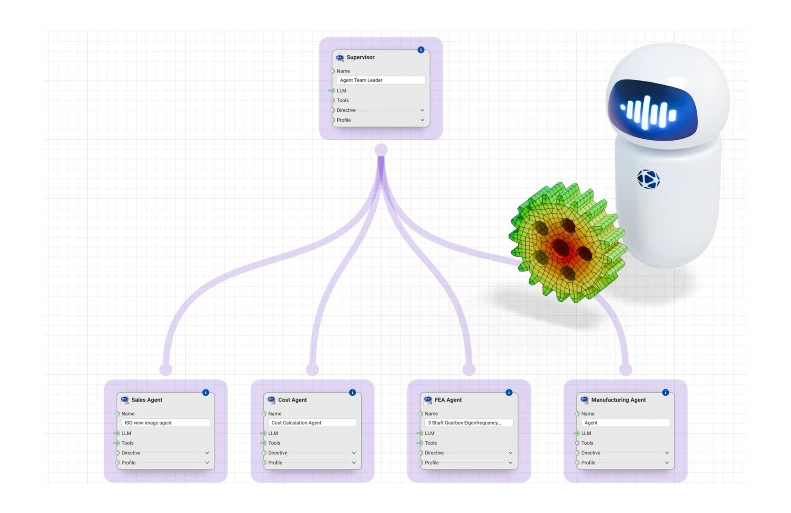
Synera began with rulebased, visual workflow automation, because research and development has many disconnected tools that steal time away from adding value, from exploring and testing more designs, and from innovating.
Workflow automation in Synera connects the engineering tech stack to save time and reduce bottlenecks around engineering expertise. In 2025, we didn’t abandon our workflow automation foundation. We built on it and made it accessible to AI Agents.
Industry analysts took notice and Frost & Sullivan Research Director Karthik Sundaram described Synera as “reimagining engineering as an AI-native discipline where human creativity is amplified by autonomous digital teammates, changing how products are conceived, developed, and commercialized.”
You can download Frost & Sullivan’s ROI analysis of Synera for more details.
Workflows still matter in an agentic world
There is a misconception that agents replace workflows. In reality, workflows anchor them and make them trustworthy.
Rulebased automation excels where:
- Steps must be correct every time
- Tool execution is deterministic
- Compliance and traceability matter
Agentic AI for engineering systems excel where:
- Reasoning is required
- Inputs vary
- Context must be interpreted
- Requirements must be met
The biggest product leap Synera made in 2025 was this: agents can now assemble engineering workflows that once required manual setup. This sounds simple. In practice, it required deep expertise across the entire engineering tech stack.
AI agents that can build workflows
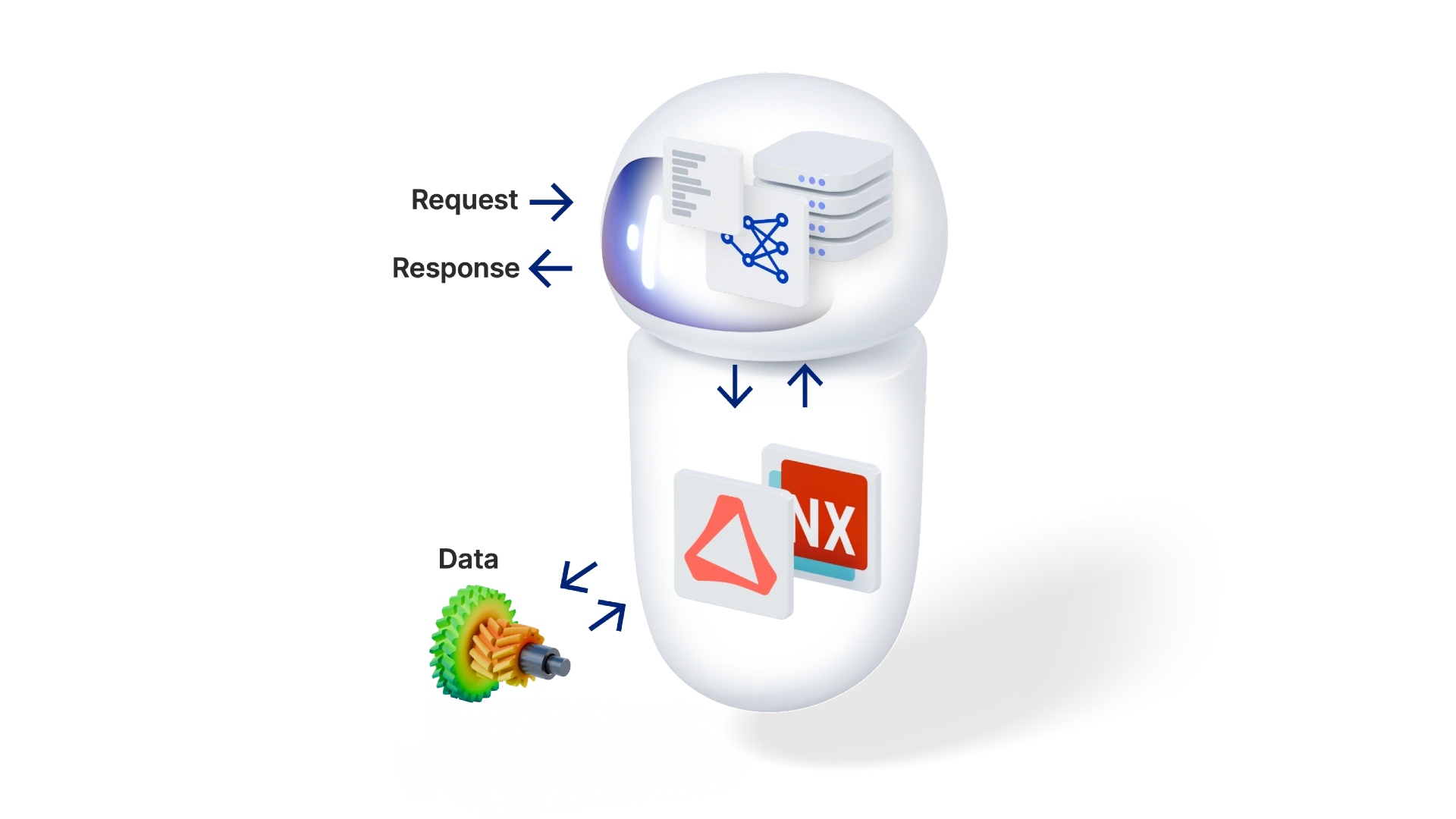
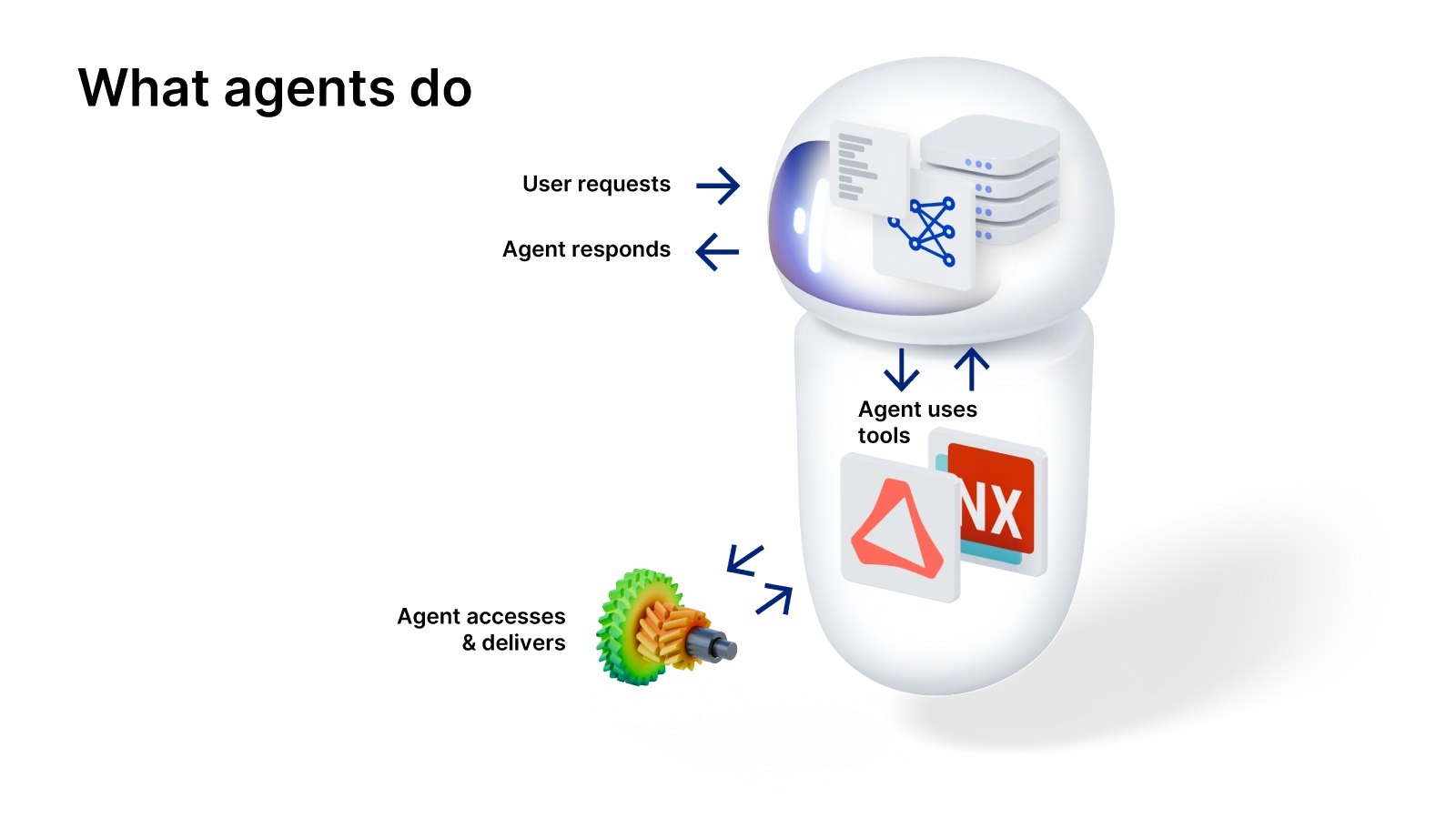
Enabling agents to build workflows required more than adding a language model. We had to rethink how intelligence, execution, and trust work together inside the platform.
In 2025 our product enhancements included:
- A user experience where AI agents feel like a natural part of the platform
- Enterprise-ready access to large language models through products like AWS Bedrock and OpenAI, supported by a flexible AI layer
- A scalable, server-centric architecture with strong monitoring and control
- Quality systems such as guardrails, quality assurance (QA) agents, and evaluations to ensure precision
- Training and enablement, including prompt playbooks and guidance on use cases like request for quotations (RFQs), computer aided design to computer aided engineering (CAD-to-CAE) automation, and costing
- Integrations with leading engineering platforms such as Altair/Siemens, Dassault 3DEXPERIENCE, and more than 75 other tools
In 2025, connectivity became just as important as intelligence. Agents only matter if they can act. This means deep integration into the tool landscape our customers use every day. We pushed forward on interoperability and partnerships that help agents work across systems. This included partnerships with UiPath for agent communication across the enterprise and Autodesk to connect tools like Fusion, Inventor, and relevant CAD workflows.
AI embedded directly inside workflows
A new level of automation becomes possible when AI can read information, understand it, and make smart choices while a workflow is running. This happens without losing track of what was done, which preserves traceability.
AI-enabled workflows also allow agents to search product databases comparing multiple criteria to find the best fit, even if there’s no exact match.
Making agentic systems predictable and trustworthy
One lesson stood out in 2025. Agent autonomy must build user confidence.
That is why our latest release gives users more control:
- Every agent can now communicate directly with the user
- Pause and Stop controls let users intervene in real time
- Agent conversations can be exported for full review
- Improved prompt stability leads to more consistent behavior
The result is a clearer and more predictable multi-agent experience, even when several agents work in parallel. With new technology like this, users must understand why something happened. Transparency builds trust in the results. You can learn more in our release webinar 25.11 Outstanding Odysseus.
This article is the second in a series by Synera CEO Dr. Moritz Maier about how Synera built agentic automation for engineering, helped usher in a new era of vehicle technology development and moved closer to a “JARVIS for Engineers”. A 360° year-end reflection from the CEO’s perspective. Read the first article, From Breakthrough to Reality: Why Multi Agent Engineering Finally Works.
About the author:

Dr. Moritz Maier is CEO & Co-founder of Synera. He was fascinated by the connection between technology and entrepreneurship from an early age – founding his first company at 16. His path later led him through scientific research and consulting to the central question that drives him to this day: How can engineers work more intelligently through automation – rather than just faster?
With a PhD in product development processes and experience in generative design, additive manufacturing, and process automation, he now works on the vision of digital engineers: AI agents that support technical development teams and give them more space for innovation.
His approach: Technology should adapt, not the other way around – only then can it truly help people in everyday engineering.