Agentic AI Meets Weldline Mapping for End-to-End Injection Molding Simulation
The latest Converse add-in update by PART Engineering automatically maps weldline data from injection molding simulation directly into your structural FEA model
The Weakest Spot in Every Injection-Molded Part Is Being Ignored
Weldlines are one of the most common structural vulnerabilities in injection-molded plastic components. They form wherever two melt flow fronts meet during filling, and at those locations, molecular orientation, notch effects, and reduced packing pressure combine to measurably reduce local strength compared to the surrounding material. In some cases, weldlines reduce local component strength significantly, by as much as 50%.
Every simulation engineer working with injection-molded parts knows this. Yet in practice, weldline effects are routinely left out of structural FEA models entirely, or handled with rough approximations, like assigning blanket lower-strength properties to estimated weldline zones based on rule of thumb rather than actual process data. The reason is practical: getting accurate weldline information from a molding simulation into a structural model has always required significant manual effort, and that effort rarely fits into a routine simulation workflow.
The consequence is structural analyses that overestimate part strength. The most critical position in a component is not necessarily the one with the highest stress, but the one with the highest utilization ratio, and weldlines are a major cause of local strength reduction that standard FEA setups miss entirely. Design sign-offs happen based on predictions that don't reflect manufacturing reality, and failures in the field trace back to a weldline nobody modeled properly.
Weldline Data, Mapped Automatically From Process to Structural Simulation
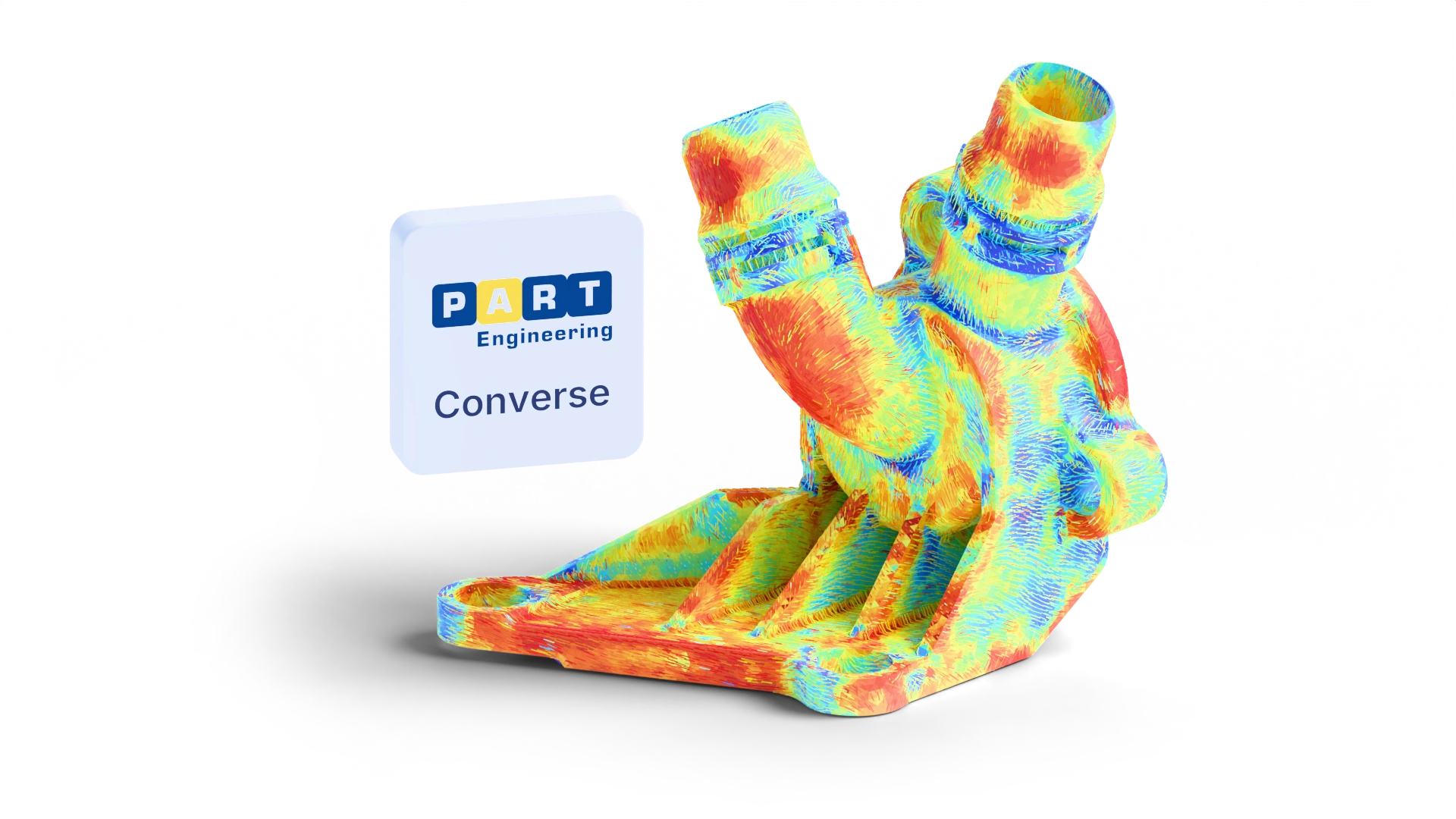
The latest enhancement of the Converse add-in introduces automated weldline mapping directly inside Synera. Weldline locations identified in the injection molding simulation are automatically transferred and mapped onto the structural FEA model. Weldline strength is then estimated as a function of weldline angle rheological parameters of the melt using MatScape, PART Engineering's material modeling module built into Converse, which generates ready-to-use material cards and strength properties for FEA analysis and assigns them to the mapped weldline locations in the structural model.
This means the structural analysis no longer relies on guesswork about where weldlines are or how much they reduce local strength. The actual weldline position and geometry from the process simulation drives the property assignment, and the strength estimate is physically grounded rather than based on conservative rule-of-thumb assumptions.

The new weldline mapping capability integrates within Synera's automated end-to-end simulation workflows, combining:
- Injection molding process simulation results as the input
- Automatic weldline identification and location transfer
- Weldline strength estimation in MatScape based on weldline angle and melt properties
- Mapped local strength properties assigned directly to the structural FEA model
- Structural analysis that reflects actual manufacturing-induced weaknesses
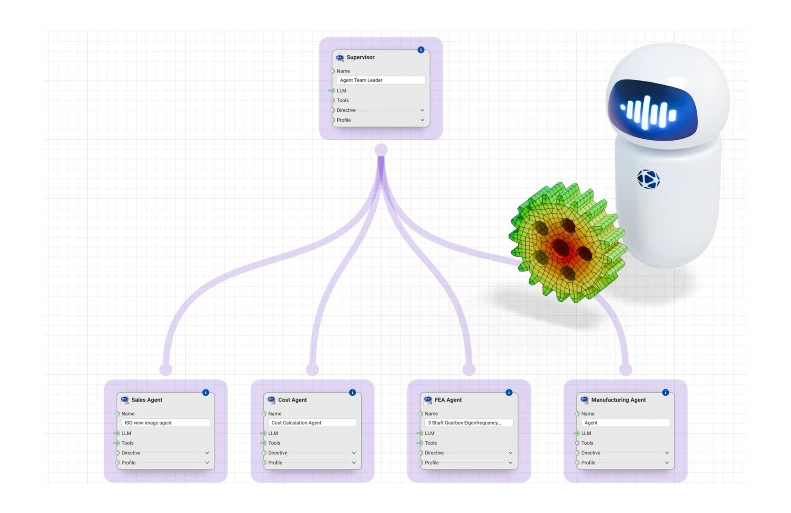
Synera’s AI agents can call a full Converse weldline mapping workflow autonomously, triggering the transfer of process simulation data, running the MatScape strength estimation, and updating the structural model as design inputs change. For teams running iterative simulation loops across multiple load cases or design variants, the agent handles the weldline assessment at every cycle without requiring manual intervention at the handoff between process and structural simulation.

Enhancing the Synera Marketplace with weldline mapping is exactly the kind of integration that makes the agentic platform more powerful for every simulation engineer using it. Bridging process and structural simulation has always meant manual effort at the handoff. Now that handoff is automated inside Synera and because Synera’s AI agents can call these workflows autonomously, the full loop from injection molding simulation to structural strength assessment can run on a connected engineering toolstack.
— Andrew Sartorelli, VP of Software Partnerships at Synera
What's New: From Manual Workarounds to an Automated Workflow
Previously, incorporating weldline effects into a structural FEA model required two separate manual steps: estimating where weldlines were located based on experience or a separate review of molding simulation results, then assigning lower strength properties to those estimated zones by hand. Both steps were prone to misjudgment. Weldline locations were approximated rather than transferred, and strength reduction values were often based on conservative rules of thumb rather than material- and geometry-specific data.
The new functionality changes both. Weldline locations are now transferred automatically from the process simulation to the structural model. No more manual identification or zone assignment required. And with MatScape's weldline angle-dependent strength estimation, the reduction in local properties reflects the actual geometry of the weld rather than a blanket conservative assumption.
“The result is a weldline assessment that is both more accurate and more practical to include in routine simulation workflows,” explained Dr. Wolfgang Korte, Managing Director at PART Engineering. “For users that leverage Synera’s AI agents, this mean they are calling workflows that ensure high accuracy and that engineers can trust the results.”
Combined with Synera AI agents, this end-to-end workflow can run continuously and autonomously, eliminating the process-to-structural handoff as a bottleneck entirely.
The ROI: More Reliable Predictions, Earlier in Development
The value of weldline mapping shows up where it matters most — in simulation accuracy and development confidence:
- More realistic strength predictions for injection-molded plastic components, grounded in actual process data rather than approximations
- Reduced manual effort in structural simulation preparation — weldline transfer and property assignment are automated
- Faster design iterations through end-to-end automated workflows inside Synera Improved product reliability and reduced risk of unexpected field failures at weldline locations
- Earlier detection of critical areas in the development process, before physical testing
By bringing weldline effects directly into structural analysis workflows, simulation engineers can evaluate the true structural performance of injection-molded components with confidence — and catch weldline-driven failures before they reach the test rig.
Built for Simulation Engineers Working With Injection-Molded Plastic Components
The Converse weldline mapping functionality is designed for simulation engineers responsible for the structural assessment of injection-molded plastic parts — particularly in automotive and industrial applications where plastic components carry structural load and part failures have downstream consequences. If your current workflow treats weldlines as a known risk that's difficult to account for properly, this update makes it practical to include them in every simulation you run.
Visit the Synera Marketplace or your internal IT admins to install the Converse add-in.
Use of the Converse add-in requires an active PART Engineering Converse license. The MatScape module for weldline strength estimation is an integral part of the Converse software suite. Contact PART Engineering for licensing information.