What Synera's $40M Series B Means for Engineering
The largest automation gap in enterprise software is finally closing. Here is what that means for your R&D organization.
During my studies in aerospace engineering, all the way up to my PhD in production technology, I spent more time running mesh scripts by hand and reformatting files between systems than I did actually engineering. That frustration is what Synera was built to solve.
Every major enterprise function has been transformed by software. Finance runs on ERPs. Sales runs on CRMs. Marketing has automation platforms that handle everything from lead scoring to campaign execution. Engineering, the function responsible for designing the most complex products humans have ever built, still runs on disconnected tools, manual file transfers, and institutional knowledge that lives in one expert's head.
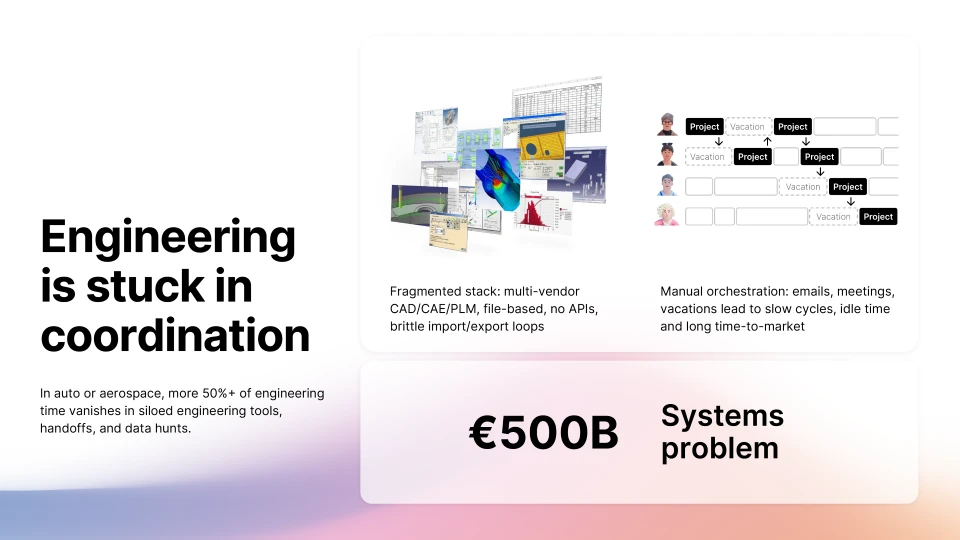
More than half of R&D engineering time disappears into coordination rather than creation. Analysts estimate the global cost of this structural inefficiency at around €500 billion. It is a significant automation gap. And it is the one Synera was built to close.
We have just closed a $40M Series B, led by Revaia, with participation from UVC, BMW iVentures, Spark Capital, Venture Stars and Capgemini through ISAI Cap Venture. For engineering leaders in automotive and aerospace, this is worth paying attention to, not because of the number, but because of what it confirms.
Why Your Existing Vendors Have Not Solved This
The natural question any engineering leader will ask is: why can't Siemens, Dassault, or Ansys simply solve this themselves?
The answer is structural. Each of the major computer aided engineering (CAE) vendors competes to keep customers inside its own ecosystem. Building a neutral orchestration layer that connects their tools to a competitor's would work directly against their commercial interests. So the cross-vendor integration problem has sat unsolved for decades.
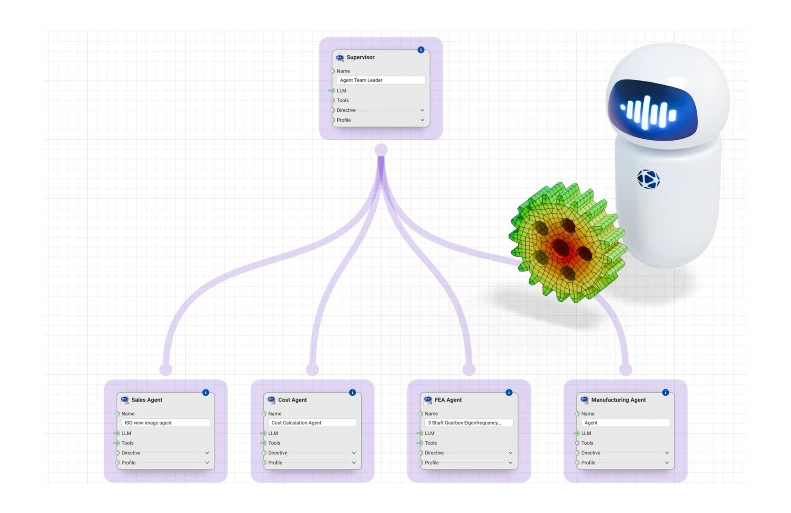
Synera's position outside the vendor ecosystem is a key strength. The platform connects to over 80 engineering tools without requiring you to replace any of them. Every process mirrored as a digital workflow in Synera is deterministic, auditable, and reproducible, which matters enormously in industries where traceability is a regulatory requirement, not a nice-to-have.
What the Market Is Already Telling You
Something shifted in the past 12 months. Board-level mandates to explore and deploy agentic AI moved from aspiration to operational urgency across automotive and aerospace organizations. Companies that had been running cautious pilots started signing significantly larger contracts.
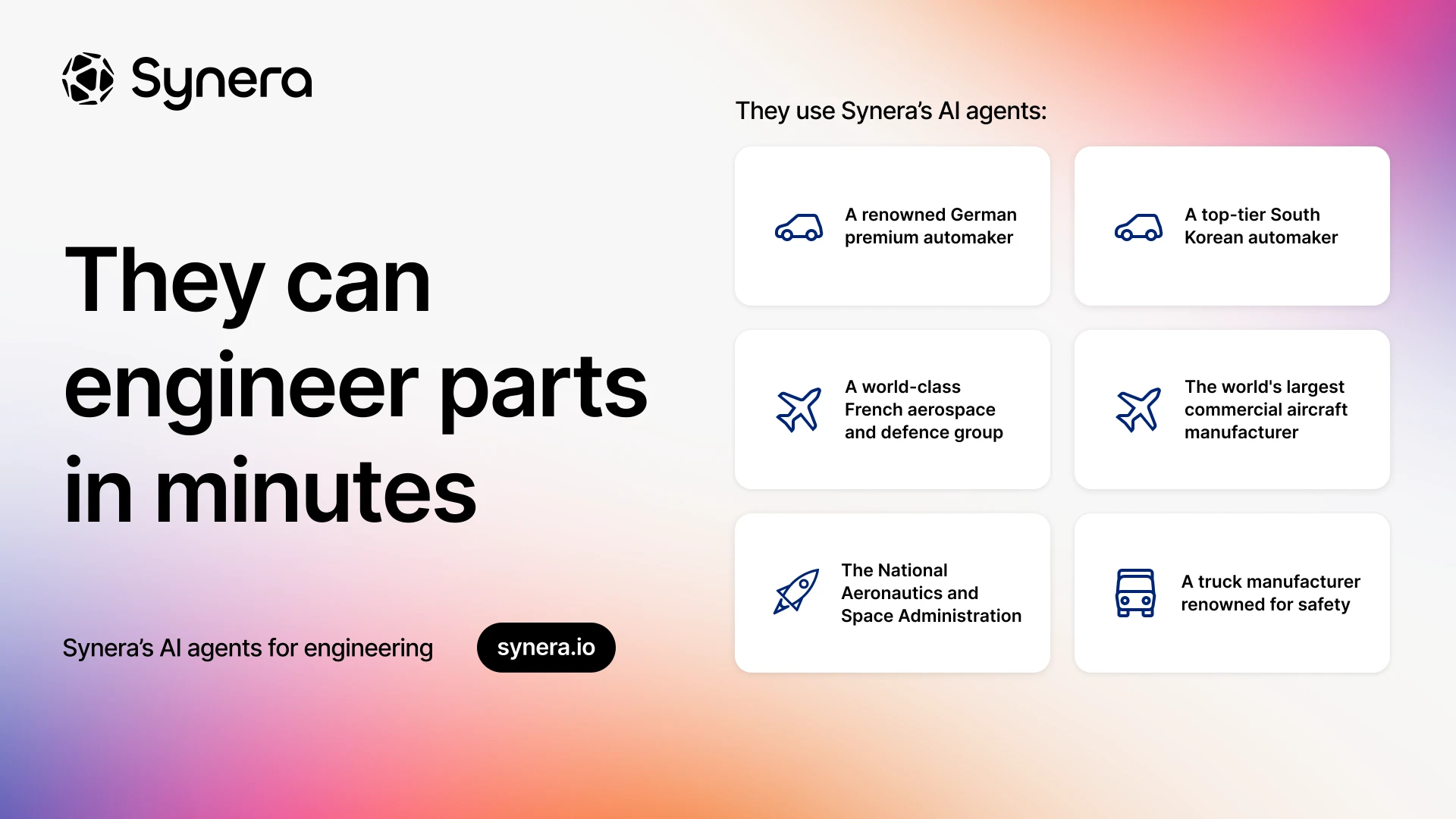
Synera's ARR doubled in 2025. Sixty percent of new business came from agentic AI rollouts. The buying motion flipped from engineering teams piloting the technology bottom-up to executives pulling it in top-down. We now serve 60 enterprise customers across 15 countries, including BMW, Airbus, Hyundai, Volkswagen, NASA, STIHL, Miele, and L'Oréal. If you are a VP of Engineering and this dynamic feels familiar, it is because your peers are already making these decisions.
What It Looks Like in Production
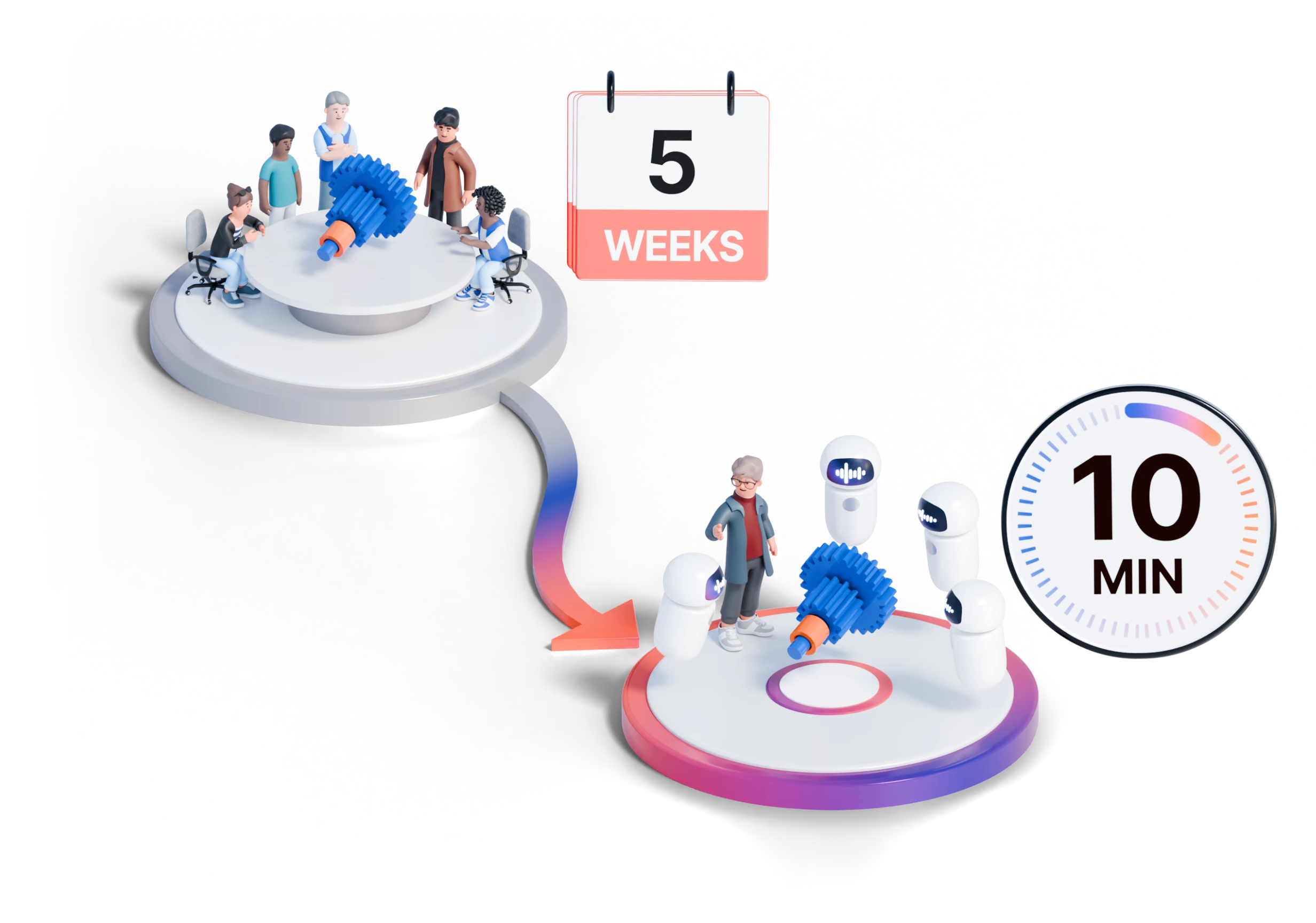
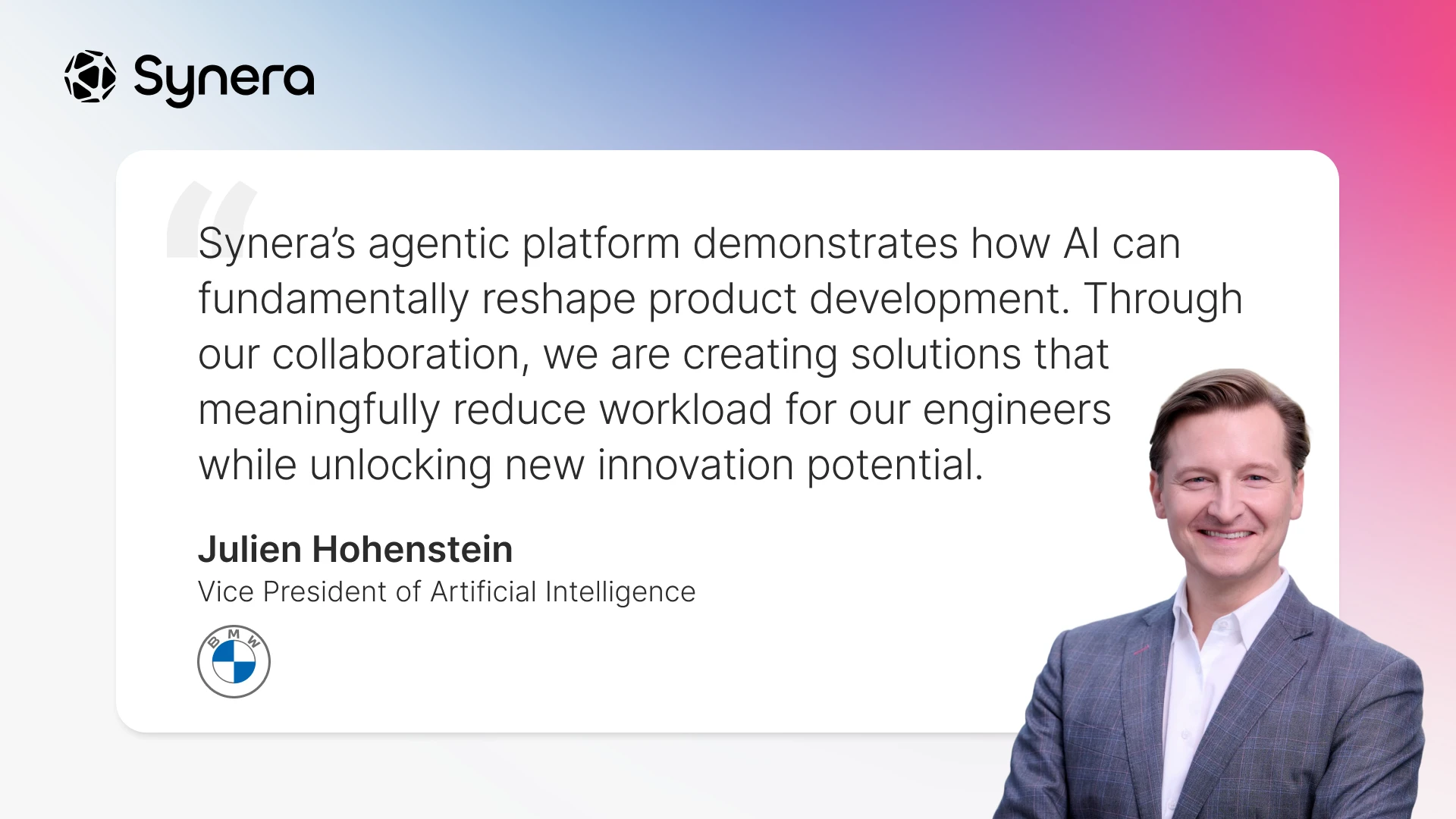
BMW has compressed a process from three weeks to two minutes. Julien Hohenstein, Vice President of Artificial Intelligence at BMW, put it directly in Synera’s Series B press release: "Synera's agentic platform demonstrates how AI can fundamentally reshape product development. Through our collaboration, we are creating solutions that meaningfully reduce workload for our engineers while unlocking new innovation potential."
Airbus reduced the time to produce a request-for-quote from 50 hours to 7 minutes. At the CDFAM Computational Design Symposium in Barcelona in April, engineers from SEAT S.A. presented how a development process that previously took two hours now runs in five minutes using Synera.
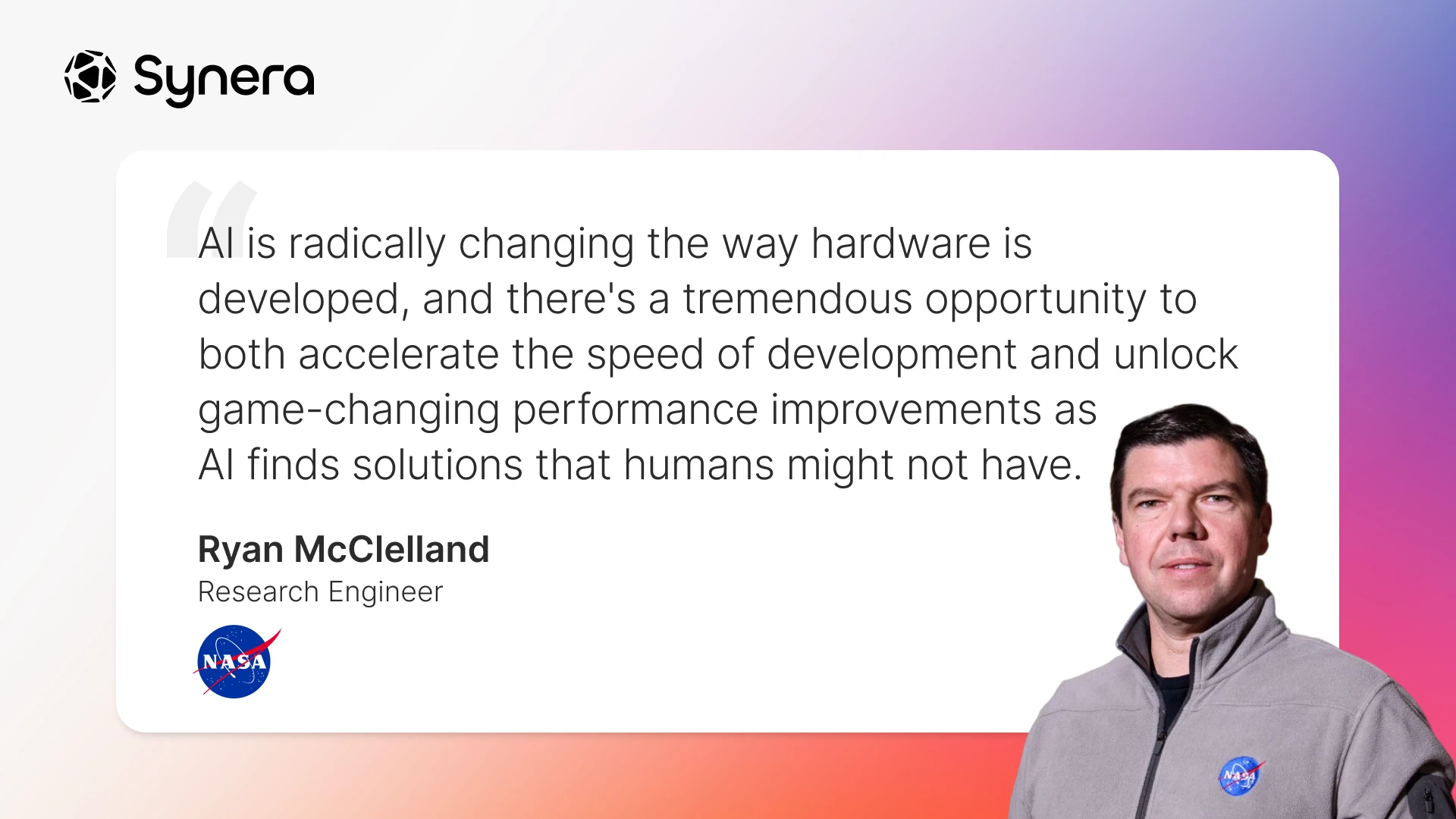
And at NASA, where the team has been working with us since 2024 on the Text-to-Spaceship project, research engineer Ryan McClelland described what this shift looks like from the frontier of engineering: "AI is radically changing the way hardware is developed, and there's a tremendous opportunity to both accelerate the speed of development and unlock game-changing performance improvements as AI finds solutions that humans might not have."
What This Investment Makes Possible
The $40M goes into the areas that matter most to engineering operations leaders: more Forward Deployed Engineers to accelerate enterprise rollout, expanded Customer Success and Solution Engineering capacity, a continuously updated learning academy that reduces adoption friction across large distributed teams, and deeper product capability across design-to-cost and RFQ automation workflows.
For teams still evaluating the platform, it removes the key enterprise risk: Synera now has the capital, the customer base, and the investor backing to scale and support you over the long term.
And on the product side, the J.A.R.V.I.S. vision is closer than ever. The vision we have had since founding Synera: an AI system that engineers can interact with naturally to design, simulate, and iterate on hardware in real time. We are already showing sneak peeks to customers. The future of engineering is now.
The Lead Being Built Today Will Not Be Easy to Close
The engineering organizations deploying agentic AI now are not just getting faster. They are encoding their best processes into repeatable, scalable workflows. They are capturing institutional knowledge before it walks out the door with a retiring engineer. They are building organizational capability of working alongside AI agents that deepens with every use.
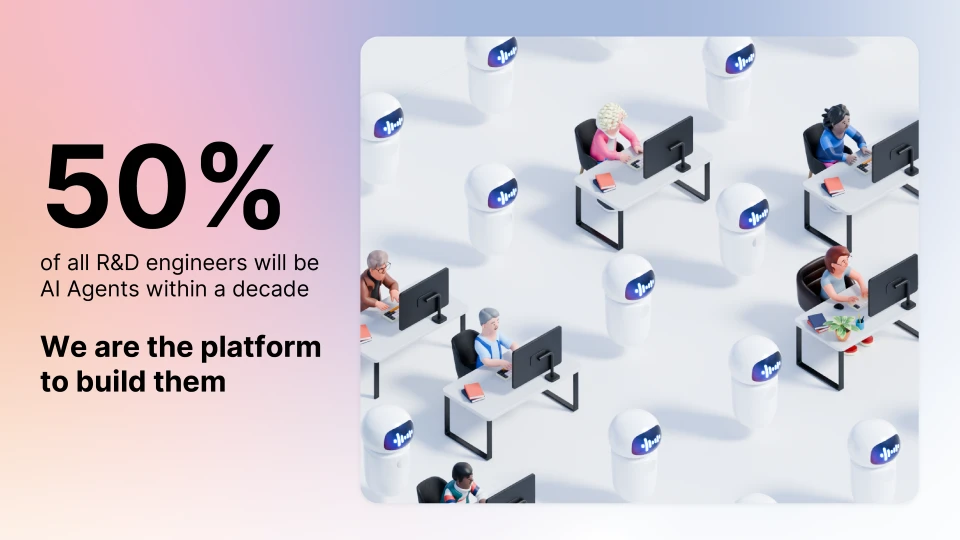
That process knowledge, those encoded workflows and organizational transformations: they take time to build regardless of when you decide to start. The earlier you begin, the deeper the moat. The organizations that wait are not just delaying efficiency gains. They are starting a compounding disadvantage that will be harder to reverse every year as those who adopt agentic AI reach faster time-to-market and lower production costs.
Sign up for Synera's blog newsletter to get AI engineering insights, customer stories, and practical guidance delivered directly to your inbox.
About the author:

Dr. Moritz Maier is CEO & Co-founder of Synera. He was fascinated by the connection between technology and entrepreneurship from an early age – founding his first company at 16. His path later led him through scientific research and consulting to the central question that drives him to this day: How can engineers work more intelligently through automation – rather than just faster?
With a PhD in product development processes and experience in generative design, additive manufacturing, and process automation, he now works on the vision of digital engineers: AI agents that support technical development teams and give them more space for innovation.
His approach: Technology should adapt, not the other way around – only then can it truly help people in everyday engineering.